HHFFZgKaAAA4Bjk

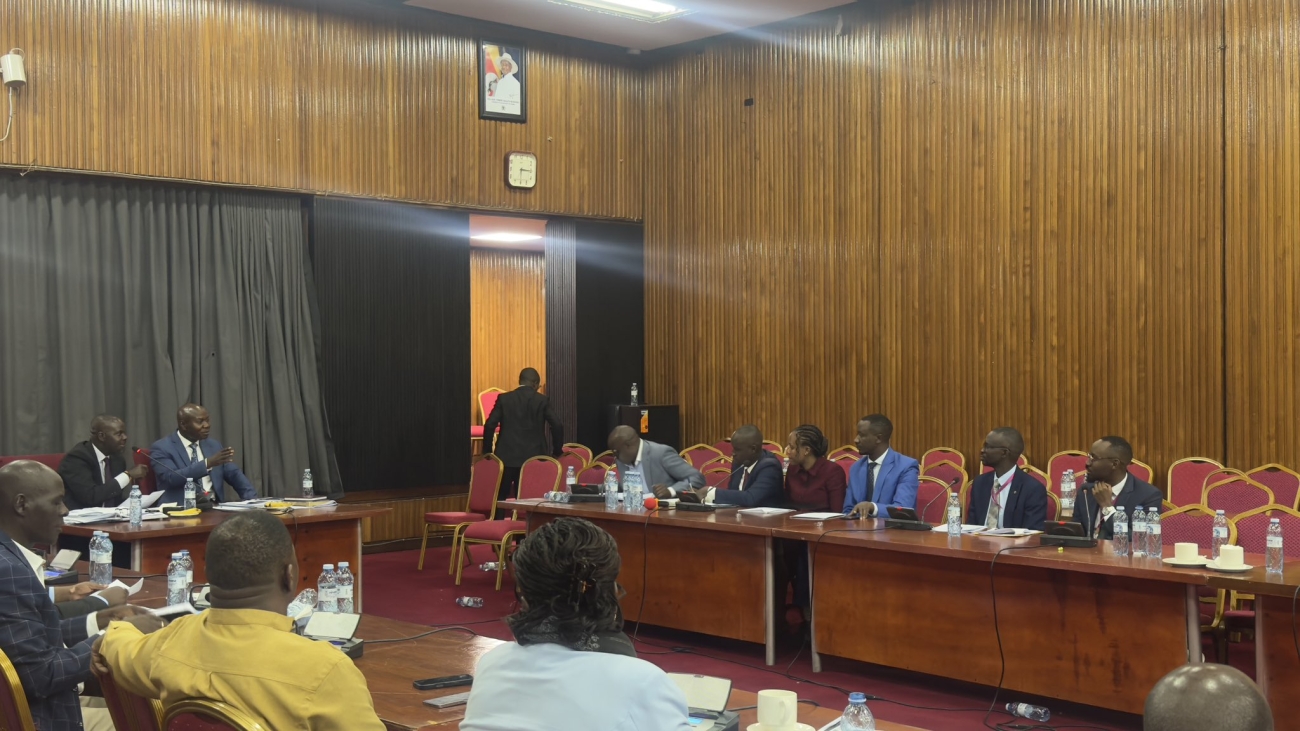
ANALYSIS OF STAKEHOLDER SUBMISSIONS ON THE PROTECTION OF SOVEREIGNTY BILL (2026)

As debate on the Soverignty Bill grows, voices from civil society, academia, the private sector, and policy experts have raised critical concerns, and important insights.

This analysis brings those perspectives together, highlighting key areas of consensus, emerging risks, and what they mean for constitutional rights, governance, and Uganda’s future.

Understanding these submissions is essential to shaping a law that truly protects sovereignty without undermining the very foundations it seeks to defend.

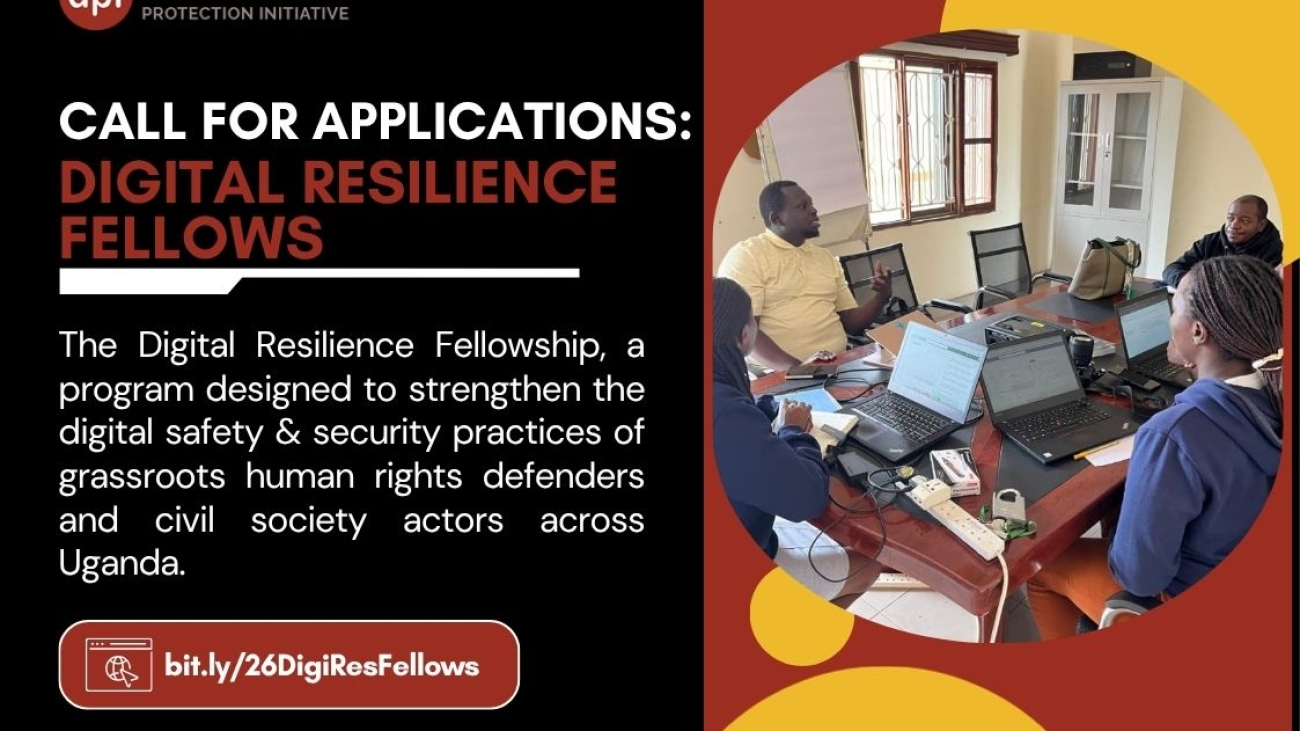
Call for Applications Digital Resilience Fellows

Digital Resilience Fellowship 2026

Defenders Protection Initiative (DPI) is pleased to announce the launch of the Digital Resilience Fellowship 2025–2026, a targeted program designed to strengthen the digital safety and resilience of grassroots human rights defenders and civil society actors across Uganda.

About the Fellowship

As digital threats continue to evolve, many organizations and frontline defenders particularly in underserved regions face increasing risks such as surveillance, account compromise, online harassment, and data loss.

This Fellowship responds to that reality by supporting a small, carefully selected cohort of individuals embedded within organizations, who are positioned not only to strengthen their own digital safety, but also to extend these skills to the teams and communities they work with.

What the Fellowship Offers

Participate in an 8-week structured mentorship

Be paired with a mentor from the Digital Security Alliance (DSA)

Strengthen digital resilience within their organizations

Share practical digital security knowledge within their communities

Receive hands-on support in device security, secure communication, account protection, data backups, and incident response

Who Should Apply

This Fellowship is intended for individuals who are:

  • Actively working within a civil society organization or community-based initiative
  • Engaged in work related to human rights, environmental protection, media, or civic engagement
  • Operating in Northern, Eastern, Western, or Southern Uganda
  • Facing or exposed to digital risks in their work
  • Committed to applying and transferring digital security skills to their organization and community

How to Apply

Interested applicants can submit their application through the link below:

At DPI, we recognize that digital security is no longer optional, it is essential to sustaining civic space and protecting those working at the frontlines. Through this Fellowship, we aim to build a network of digitally resilient actors who can safeguard not only themselves, but also the communities they serve.

dpi-self-assessment-v2_s

Digital Security Self-Assessment Tool for Defenders

Human rights defenders, journalists, activists, land and environmental defenders, and wider the civil society organizations face a growing wave of digital threats from surveillance, hacking, phishing, account takeovers, and data theft. These attacks are designed to silence, expose, and intimidate those doing vital work.

Yet most defenders and organizations have never assessed their digital security posture or know where to begin.

This free Digital Security Self-Assessment Tool we developed is built for anyone on the frontlines whether you are an individual activist, a journalist protecting sources, a land defender in the field, or a civil society organization managing sensitive beneficiary data.

In under 30 minutes, work through 70 indicators across 10 security domains including secure communications, device security, data protection, account security, incident response, and more. You will instantly receive a personalized risk score and a prioritized action plan showing exactly what to fix and in what order.

Free. No account needed. Your responses never leave your browser.

Yellow Minimalist Doodle Did You Know Instagram Post (2)

The Digital Shift in Illicit Finance: A Critique of AML/CTF’s Obsolete Focus on Traditional Banking

By Jordan Tumwesigye

The global financial landscape has undergone radical changes over the last decade. On one hand, this landscape has been digitized, which has promoted greater financial inclusion and efficiency. On the other hand, the financial system has birthed a sophisticated “shadow” ecosystem. Despite this transformation, the pillars of Anti- Money Laundering (AML) and Counter-Terrorist Financing (CTF) remain largely rooted in a dated banking model. This reliance on a legacy framework has created a dangerous disconnect whereby regulators are still perfecting the art of monitoring bank transactions and wire transfers while illicit actors have migrated to decentralized, borderless, and automated digital rails.


The Migration of Shadow Capital
For decades, the “gold standard” of AML was the Know Your Customer (KYC) protocol at commercial banks. It was assumed that if you could control the gates of the traditional banking system, you could theoretically starve criminal enterprises of their oxygen. However, 2025 data from The Financial Times suggests a radical pivot with an estimated $158 billion in illicit cryptocurrency flows. This represents a significant increase from previous years, driven not just by individual hackers, but by state-aligned
actors and sophisticated underground banking networks.


Traditional banking relies on centralized intermediaries who act as “gatekeepers.” In the digital shift, these gatekeepers are being bypassed through peer-to-peer protocols that allow for lending, trading, and asset management without a central authority to conduct KYC. Moreover, digital assets like the ruble-pegged A7A5 or USD-pegged tokens that offer the liquidity of cash in an instant can be difficult to track. Lastly, techniques that confuse the trail of funds through jumping across different blockchains or using “tumblers” to blend illicit funds with legitimate ones can be difficult for these gatekeepers
to track.


Why Traditional AML/CFT is Failing
Traditional AML systems often rely on batch screening of transactions, which happens days after the transaction has been conducted. In a digital world of instant payments and “flash loans,” a criminal can move funds through ten different jurisdictions and three different asset classes in the time it takes a bank’s compliance software to flag a single suspicious wire. By the time a Suspicious Activity Report (SAR) is filed, the “money” has already been laundered and converted back into untraceable assets.
Secondly, AML regulations are inherently confined to defined geographical limits. Digital finance, however, is inherently agnostic to borders. A “Chinese-linked” syndicate can use Australian digital infrastructure to move Russian-sanctioned funds into a Caribbean

DeFi protocol. Traditional banking AML struggles with “cross-border complexity,” but for a digital-native launderer, there are no border restrictions. Legacy systems focus on physical identity: passports, utility bills, and face-to-face verification. In the digital shift, identity is increasingly algorithmic. A wallet address is not a person; it is a cryptographic key. While the blockchain is transparent, the link between the “key” and the “human” is where the system breaks down. Current AML frameworks are ill-equipped to handle unhosted crypto wallets, which allow individuals to act as their own banks.


Sanctions Evasion in 2025: A Brief Case Study on the Growing Influence of Digital Currency
The obsolescence of traditional banking focus was best illustrated in 2025 by the rise of state-sponsored sanctions evasion. Nations under heavy international sanctions no longer rely on back-channel bank transfers. Instead, they have integrated crypto-rails into their national economic strategies.
According to a January 2026 Report by TRM Labs, the A7 wallet cluster associated with Russian sanctions evasion handled nearly $39 billion in 2025 alone. These flows didn’t pass through the SWIFT system or Western correspondent banks. They moved through stablecoins and “underground” digital exchanges that operate entirely outside the reach of traditional banking supervisors.


Recommendations

Failure to adapt will not just lead to more financial crime, which will, in turn, render the global financial oversight system a relic of a pre-digital age.

  1. For one, it is important to acknowledge that humans cannot effectively monitor the volume of digital transactions. Compliance must therefore shift towards real-time analytics that use Artificial Intelligence to identify patterns of “chain-hopping” or “mule” behavior as they happen.
  2. The Financial Action Taskforce (FATF)’s “Travel Rule,” which emanates from Recommendation 16 should be enforced. The rule requires virtual asset service providers (VASPs) to share sender and receiver information, which must be globally enforced. As of late 2025, fewer than half of jurisdictions were actively enforcing it, creating “regulatory havens” for illicit capital.

Conclusion
This digital shift is not a future threat; it is the current reality. By remaining hyper-focused on the pipes of traditional banking, regulators are effectively guarding the front door while the back wall has been replaced with a high-speed digital tunnel.
To remain relevant, AML/CTF frameworks must evolve from a “checklist” mentality centered on bank accounts to a data-driven strategy centered on on-chain intelligence. The goal is no longer just to “Know Your Customer,” but to “Know Your Network.”

DPI ToolKit

Digital Security Toolkit for Rights Defenders

Defenders Protection Initiative (DPI) has developed this Digital Security Toolkit to support human rights defenders and civil society organisations in strengthening their digital safety and resilience.

As defenders increasingly rely on digital tools to communicate, document abuses, and organise communities, they also face growing risks such as phishing attacks, account compromise, surveillance, and online harassment. This toolkit provides practical guidance to help organisations and individuals better understand these risks and adopt safer digital practices.

It includes simple recommendations, tools, and steps that defenders can use to secure their devices, protect sensitive information, and respond to digital security incidents.

This resource is intended for human rights defenders, civil society organisations, journalists, and community activists working in challenging environments.

ChatGPT Image Feb 13, 2026, 09_12_22 AM

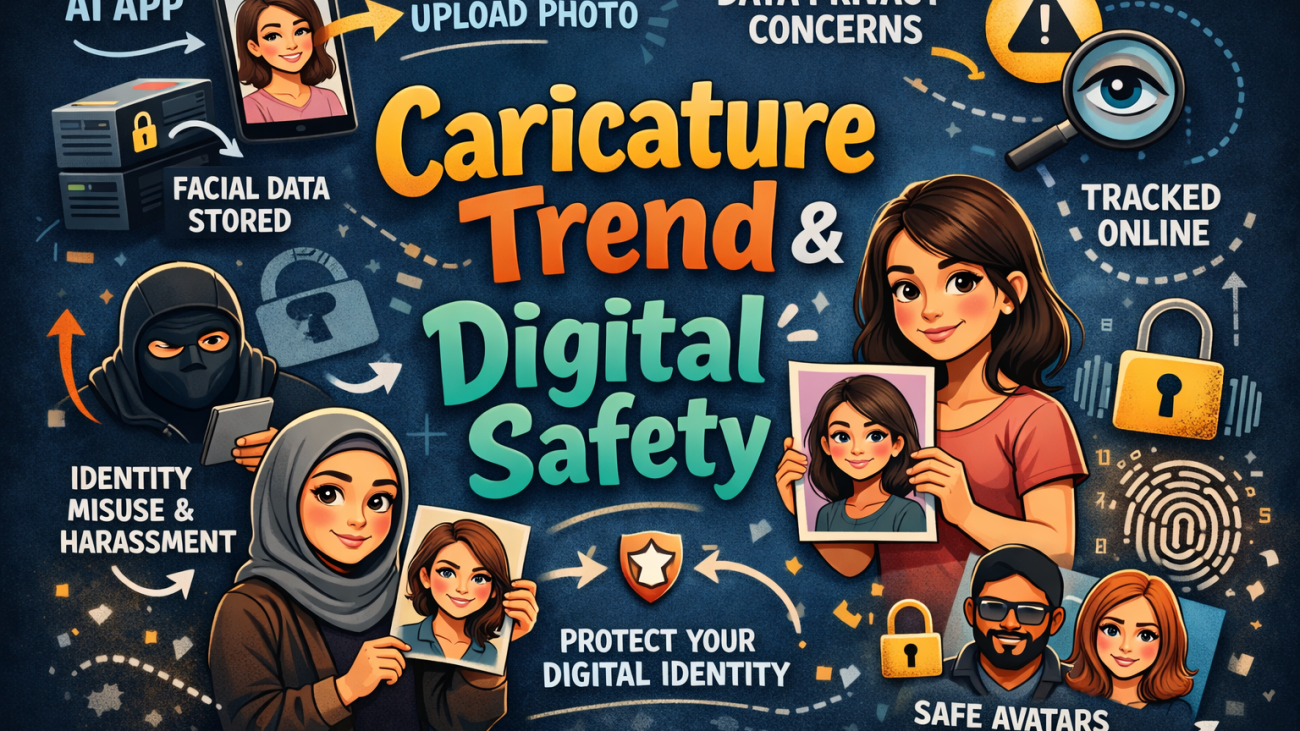
The Caricature Trend and Its Impact on Digital Safety

By Noelyn Nassuuna

Across social media platforms, caricature portraits and AI-generated avatars have quickly become a popular way for people to express themselves online. From activists and professionals to young girls exploring identity in digital spaces, many users are embracing these stylized images as profile photos or storytelling tools. While the trend looks creative and empowering on the surface, it also raises important questions about digital safety, privacy, and online protection.

A New Layer of Digital Identity

Caricatures allow individuals to present a version of themselves that feels artistic and less exposed than a real photograph. For many women and young users, especially those navigating online harassment or public visibility, avatars can feel safer. They create a sense of distance between personal identity and public presence while still allowing creativity and confidence to shine.

However, digital safety experts caution that caricatures do not always guarantee anonymity. Even stylized images may reflect recognizable features such as hairstyles, skin tone, or cultural symbols. When combined with usernames, captions, or location tags, it becomes easier for someone to connect the avatar back to a real person. This can create a false sense of privacy, where users share more information than they normally would.

The Hidden Risk of Facial Data

Many caricature tools require users to upload several photos to generate their artwork. These images may be processed by artificial intelligence systems, and sometimes stored on external servers. If the platform’s privacy policies are unclear, users may unknowingly give away biometric information such as facial structure or expressions.

For digital rights advocates, this raises concerns about data ownership and consent. Young people and first-time users may not fully understand how their images are used beyond creating a cartoon portrait. Over time, repeated uploads to different apps can expand someone’s digital footprint and increase exposure to data collection practices.

Identity Misuse and Online Harassment

Another growing concern is the potential misuse of caricatures. Screenshots or downloaded avatars can be edited or reposted without permission, which may lead to impersonation or misleading content. In online spaces where women, journalists, or activists already face targeted harassment, even a stylized image can become a tool for unwanted attention.

Digital safety practitioners emphasize the importance of maintaining control over how images are shared. Simple actions such as using trusted platforms, adjusting privacy settings, and avoiding oversharing personal details can reduce risks.

A Positive Opportunity for Protection

Despite these challenges, caricatures can also support safer online engagement when used intentionally. Some advocates choose illustrated avatars instead of real photos to lower direct identification risks. Organizations working with young girls or community leaders have also used caricatures to represent participants without exposing their real faces publicly.

The key difference lies in awareness and informed choice. When users understand the digital implications behind the trend, caricatures can become a creative safety tool rather than a vulnerability.

Building a Culture of Digital Awareness

As the caricature trend continues to grow, conversations around digital safety must grow alongside it. Encouraging users to read app permissions, understand data privacy, and think critically about online identity can help create a safer digital environment.

Caricatures are more than just a social media trend, they are part of how people shape identity and community online. By balancing creativity with caution, individuals and organizations can enjoy the benefits of this artistic movement while protecting privacy, dignity, and security in digital spaces.

WhatsApp Image 2025-12-10 at 13.18.41

Supporting Safer Digital Participation at DataFest Africa 2025: Our Clinic and Masterclass in Action

In October 2025, our team had the honor of participating in DataFest Africa 2025, organised by Pollicy, one of the continent’s leading convenings on data, technology, and innovation. As part of this vibrant gathering of technologists, researchers, civil society actors, policymakers, and creatives, we hosted a Digital Security Clinic, offering on-site support, guidance, and practical tools to participants navigating today’s fast-evolving digital landscape.

Why the Clinic Mattered

As digital spaces continue to expand across Africa, so do the risks that come with them including data misuse, online harassment, cyberstalking, image-based abuse, misinformation, account takeovers, and digital surveillance. For many activists, journalists, developers, and young innovators attending DataFest, these threats are not abstract; they are lived realities that affect their work, mental well-being, and personal safety.

Our clinic was designed as a safe, confidential, and responsive support space where participants could:

  • Seek one-on-one guidance on digital security and privacy
  • Report or discuss technology-facilitated gender-based violence
  • Get support on securing devices, accounts, and data
  • Receive mental health referrals and psychosocial first support after online abuse
  • Learn practical safety strategies for their work and activism

What We Offered on the Ground

Throughout the festival, our team provided:

  • Personalized digital risk assessments
  • Guidance on strong passwords, two-factor authentication, and safe browsing
  • Support on responding to online harassment, doxxing, and impersonation
  • Advice on safe content creation and data protection
  • Offered updated and genuine software like antivirus, MS Office, MS Word
  • Referral to trusted psychosocial and legal response partners where needed

Participants included women in tech, youth innovators, journalists, human rights defenders, researchers, and community organizers, many of whom were encountering structured digital safety support for the first time.

Key Reflections from the Clinic

Several key themes emerged from our engagement:

  • Online harm is deeply connected to offline safety, livelihoods, and mental health.
  • Many participants had experienced harassment, impersonation, or extortion but had never received professional support.
  • There is a strong demand for localized, continuous digital safety clinics, not just one-off trainings.
  • Women and young people remain disproportionately impacted by online violence and data misuse.

Building Resilient Digital Communities

Our presence at DataFest Africa 2025 reaffirmed the urgent need to move beyond awareness-raising alone. Safety must be practical, accessible, survivor-centered, and embedded into innovation spaces. Digital rights, data protection, and online wellbeing are not optional add-ons; they are essential foundations for meaningful participation in the digital economy.

By hosting this clinic, we demonstrated that large tech and data convenings can and should integrate real-time protection and support mechanisms alongside conversations on innovation, AI, governance, and development.

Masterclass: Shaping Youth Futures Through Digital Ownership

In addition to the digital safety clinic, we hosted a featured masterclass titled “Shaping Youth Futures Through Digital Ownership” at the National ICT Innovation Hub, Nakawa. The session brought together young people, innovators, and ecosystem actors to explore how digital ownership can unlock opportunity, protection, and economic independence for African youth. Participants engaged deeply with what digital ownership truly means in today’s platform-dominated economy, emphasizing the importance of owning data, digital skills, content, and platforms as a foundation for sustainable digital participation.

The masterclass examined how young people can transition from being passive digital consumers to empowered digital creators and owners, while critically reflecting on the risks of digital exploitation, platform dependence, and unsafe monetization. It further highlighted the role of policy, infrastructure, and community networks in protecting young digital entrepreneurs. The session was co-led by Noelyn Nassuuna, Raymond Amumpaire, and Owilla Abiro Mercy, who collectively challenged participants to think beyond access toward control, agency, safety, and sustainability in the digital economy.

Looking Ahead

Following DataFest Africa 2025, we are strengthening our:

  • Mobile digital safety clinics
  • Survivor-centered referral pathways
  • Youth and women-focused digital resilience programming
  • Partnerships with tech platforms, mental health professionals, and legal responders

We remain committed to ensuring that no one has to choose between visibility and safety, innovation and wellbeing, or participation and protection in digital spaces.

WhatsApp Image 2025-11-26 at 11.36.49

LEDTAF POLICY: STRENGTHENING LAND & ENVIRONMENTAL GOVERNANCE IN UGANDA:

COMMUNITY-INFORMED PRIORITIES FOR THE NATIONAL LAND POLICY REVIEW (2025)

Executive Summary Uganda is undertaking a critical review of its 2013 National Land Policy (NLP), offering a rare opportunity to address deep-seated governance failures in land and environmental management. While the policy framework on paper is sound, its implementation remains weak, uneven, and exclusionary. Communities, especially those in ecologically sensitive or resource-rich areas, continue to experience illegal evictions, land grabbing, environmental degradation, and systemic exclusion from decision-making processes.

To inform this review, the Land and Environmental Defenders Taskforce (LEDTAF) conducted a nationwide consultation combining survey data and focus group discussions. The study captured perspectives from 68 respondents across multiple regions, with a particular focus on areas affected by infrastructure expansion, extractive projects, and forest encroachment. The results present issues of selective law enforcement, politically motivated land allocations, and increasing threats faced by land and environmental defenders, among others.

A key finding was the disconnect between Uganda’s legal frameworks and the lived realities of communities. Respondents reported weak institutional coordination, corruption in land administration, and a consistent failure to engage grassroots actors in policy implementation. Environment and land defenders face harassment, intimidation, and lack any meaningful protection under current law, with little consideration for women and youth, whose voices are often silenced by patriarchal and political barriers.

Nonetheless, communities are not passive victims. They have developed powerful, locally grounded solutions from using indigenous conservation methods and traditional dispute resolution systems to adopting digital tools for reporting violations. These community-led innovations offer practical entry points for policy reform that is both just and enforceable.

This brief translates these insights into ten targeted recommendations with concrete implementation plans. It is intended for lawmakers, policy institutions, and local government actors involved in the ongoing NLP review. Implementing these reforms will help align the national land policy with community priorities, improve institutional accountability, and create an enabling environment for inclusive, transparent, and sustainable land governance.

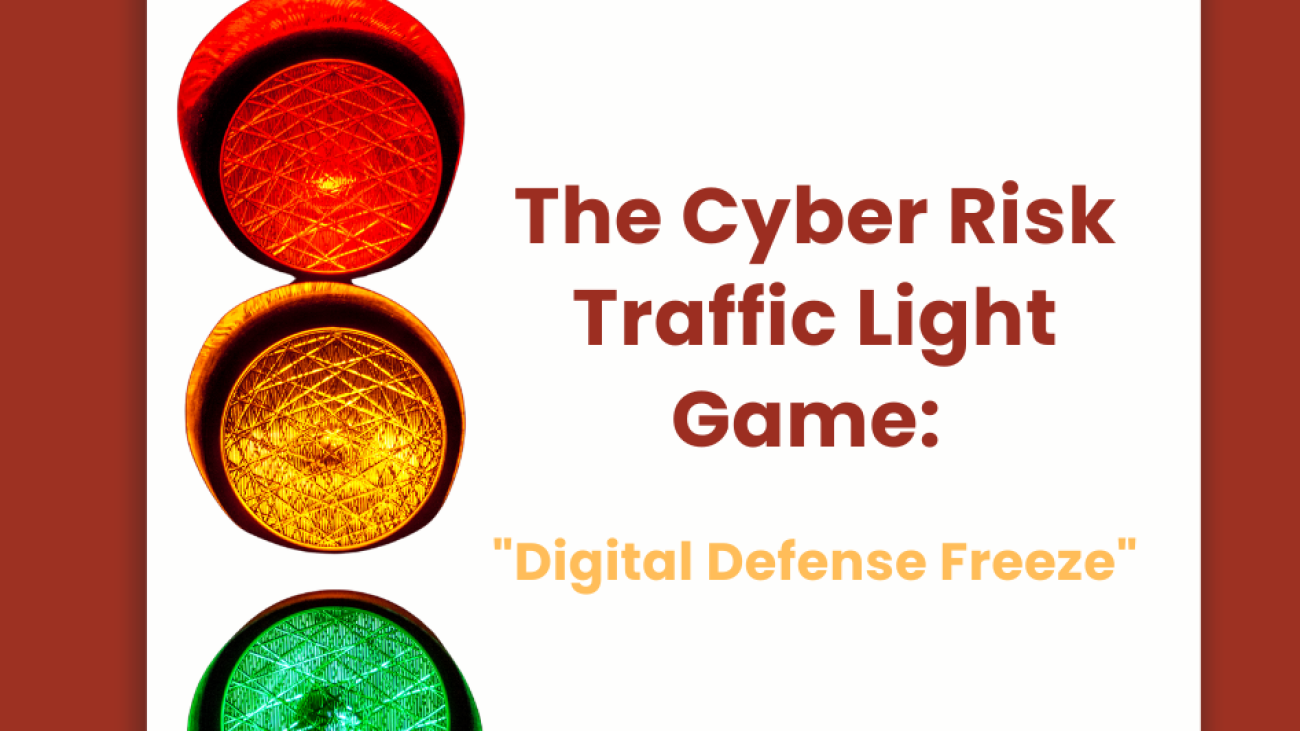
The Cyber Risk Traffic Light Game for CSOs

Introduction to the Cyber Risk Traffic Light Game: Digital Defense Freeze

Welcome to Digital Defense Freeze, an interactive Cyber Risk Traffic Light Game designed to sharpen rapid decision-making, strengthen teamwork, and build practical threat-analysis skills for CSOs, journalists, activists, and human rights defenders

In today’s rapidly evolving digital landscape, every online action carries some level of risk. This game helps participants practice identifying threats, debating complex scenarios, and choosing the safest path forward using the familiar Green, Amber, and Red traffic-light system.

Through realistic, high-pressure situations drawn from our civic space in Uganda, teams will think critically, argue their positions, and learn how to move from guesswork to informed security judgments.

Get ready to assess, debate, decide, and freeze when the risks spike!

WhatsApp Image 2025-10-06 at 13.04.11

From Uncertainty to Resilience: DPI at the Digital Immersion at FIFAfrica25

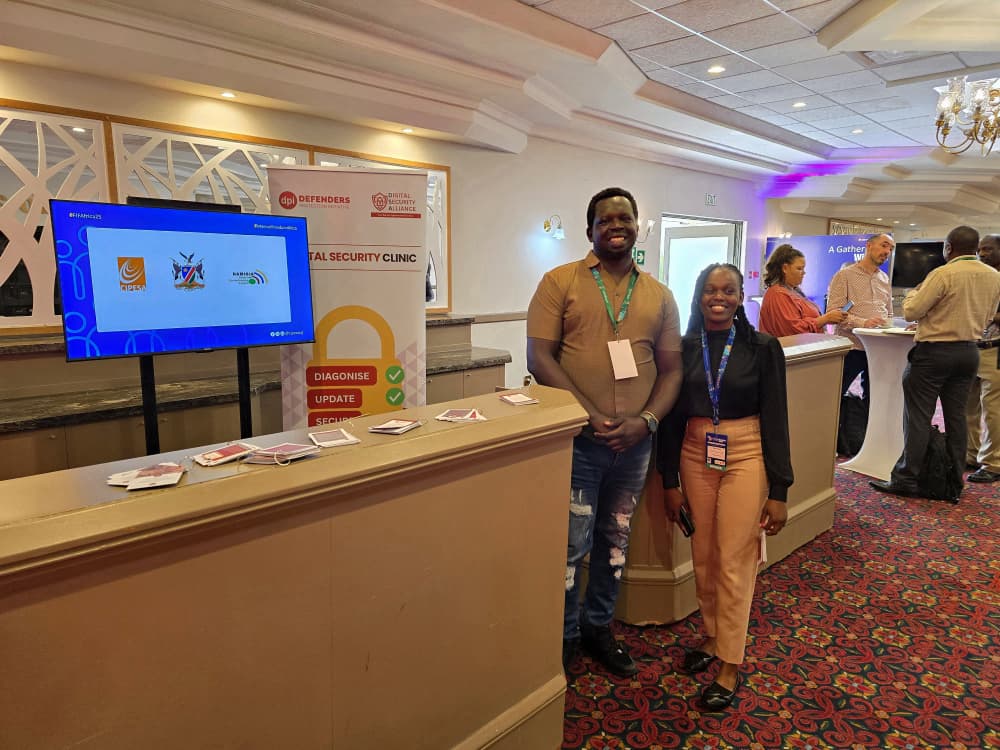
This September, Defenders Protection Initiative (DPI) proudly joined digital rights defenders, technologists, and changemakers from across Africa and beyond at #FIFAfrica25 in Windhoek, Namibia. But this wasn’t your typical conference, it was an immersive journey through the digital challenges facing human rights defenders today.

CIPESA’s Internet Freedom Maze turned abstract cybersecurity concepts into visceral, first-hand experiences. DPI was honored to take part in two critical spaces within this experience:

  • Zone 1 – The Trap of Uncertainty, and
  • The Digital Security Citadel, a live, hands-on tech corner of the exhibition.

Zone 1: Phishing, Power, and Practicality

At the heart of the maze stood Zone 1: The Trap of Uncertainty where participants were confronted with a question we all should ask more often:
“Am I truly safe online?”

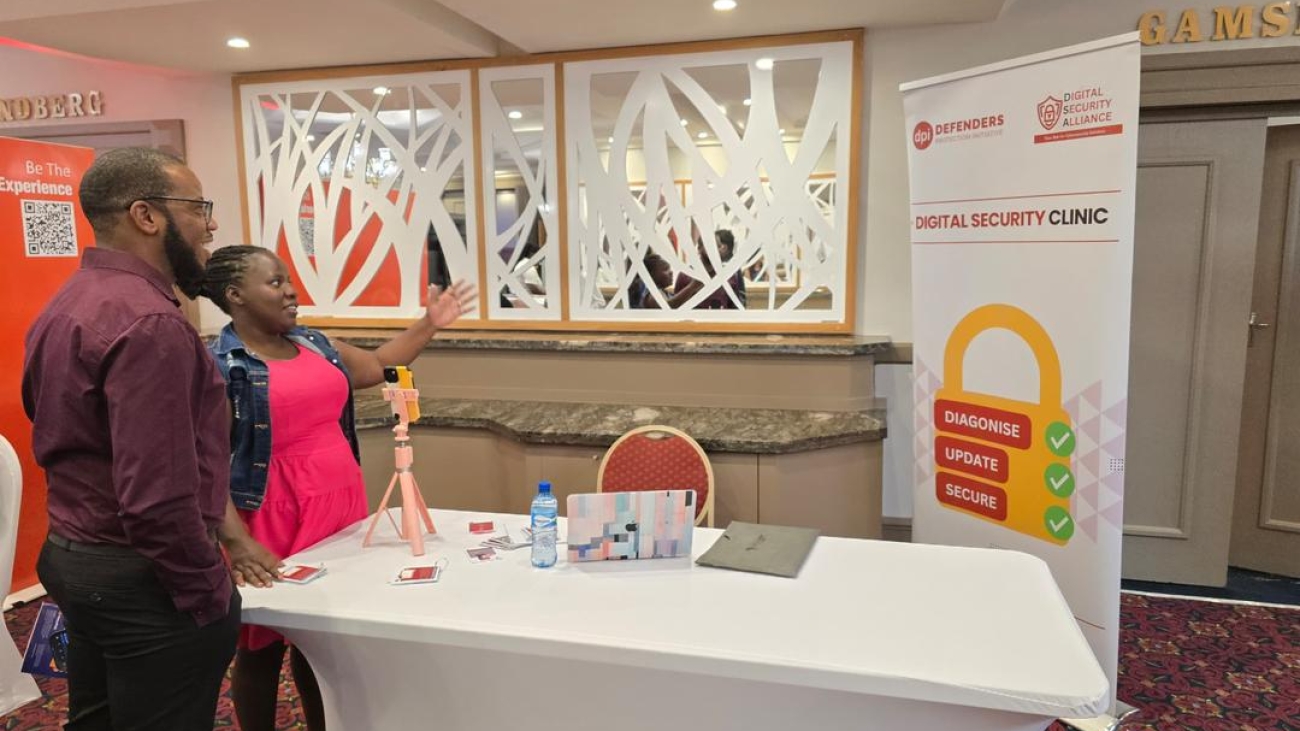
DPI’s Communications Executive, Noelyn Nassuna, alongside Ogira Charles Donaldson, a member of the Digital Security Alliance hosted by DPI, led this space with thought-provoking simulations and real-time awareness-building. They guided participants through phishing simulations where QR codes led to realistic scam scenarios. It was a mirror into our digital behaviors forcing participants to pause, reflect, and often, realize they weren’t as secure as they thought.

To support learning beyond the simulation, DPI distributed custom-designed IEC materials, including ring cards with easy-to-understand security tips, tool recommendations, and practical digital hygiene reminders. These materials proved to be not just souvenirs but starter kits for better online habits.

At the Citadel: DPI’s Digital Doctors in Action

While Zone 1 tested instincts, the Digital Security Citadel gave participants tools and knowledge to strengthen those instincts.

Here, DPI’s Fred Drapari (ICT Executive) joined a team of digital security “doctors” including:

  • Gole Andrew, who impressively rode a motorcycle all the way from Uganda to Namibia in the name of digital resilience,
  • Hapee De Groot, a long-time digital security ally whose practical support and insight added great value,
  • Brian Byaruhanga from CIPESA, and
  • Several other seasoned practitioners from the Digital Security Alliance.

The Citadel offered:

  • Hands-on demos of Microsoft Office security settings
  • Guided installs and education around tools like Kaspersky antivirus, Bitdefender Security among others
  • Walkthroughs of encrypted messaging, password management, and 2FA
  • A rerun of the phishing simulation for those who missed Zone 1 or wanted to try again

It wasn’t just a tech station, it was a real-time consultation corner where participants could ask, test, fail, learn, and try again.

Building Connections Beyond the Booth

FIFAfrica25 wasn’t only about simulation and tech it was about connection and collaboration.

At both the Maze and the Citadel, DPI engaged with:

  • Funders and donor agencies interested in expanding the reach of digital protection work
  • Civic actors and journalists facing similar threats across the continent
  • Techies and tool builders contributing to the ecosystem of safe digital activism

From spontaneous hallway conversations to deeply technical Citadel demos, every interaction reinforced a shared vision: digital resilience is no longer optional – it’s essential.

What We’re Taking Home

As DPI returns home from Windhoek, we do so with renewed clarity and purpose. We plan to:

  • Expand the phishing simulation quiz into a broader campaign across civil society and media spaces
  • Print more of our IEC ring cards for wider distribution
  • Integrate new toolkits and tactics into our ongoing Digital Security Clinics and Bootcamps
  • Strengthen our collaborations with fellow Digital Security Alliance members and regional partners

FIFAfrica25 reminded us that defending the defenders is not just a slogan: it’s a strategy that requires tools, creativity, and deep community.

Want to Connect?

📸 Check out snapshots from our booth, materials, and the simulation challenge on our page:
https://twitter.com/defprotection

Let’s keep the digital resistance alive – one safe click at a time.

#FIFAfrica25 #DigitalResilience #InternetFreedom #PhishingAwareness #Zone1 #DigitalSecurityCitadel #DigitalImmersion