
As Mental Health Awareness Month continues to spark important conversations globally, one reality is becoming increasingly impossible to ignore: our digital spaces are deeply affecting our mental well-being.
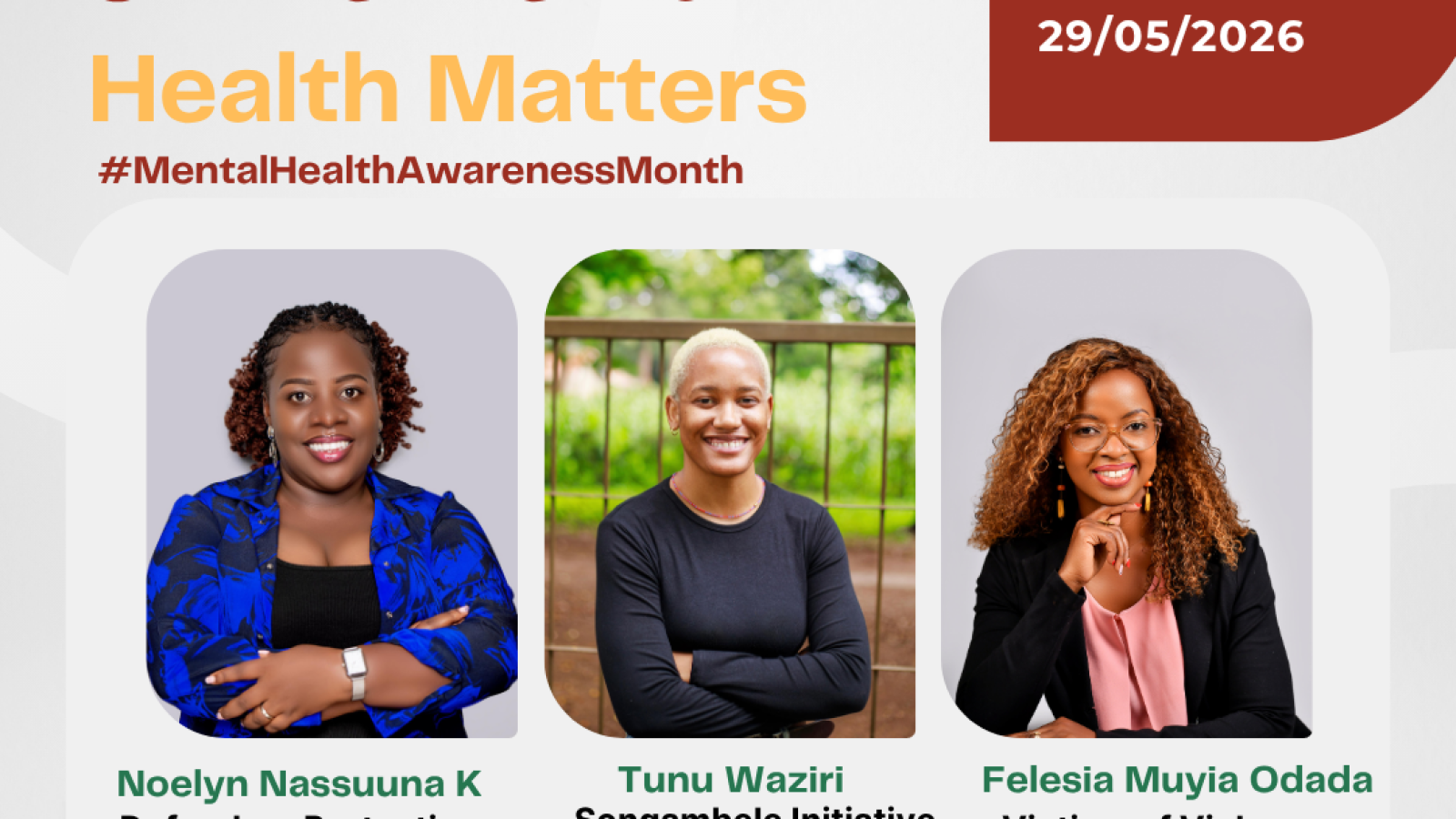
Recently, the Defenders Protection Initiative in partnership with Victims of Violence Support Africa hosted an online session titled Online Mental Health Matters, bringing together activists, journalists, feminists, researchers, human rights defenders, and digital safety experts from Uganda, Kenya, and Tanzania, to discuss the growing impact of technology-facilitated violence on mental health across East Africa.
The conversation revealed a truth: online violence is no longer “just digital.” It is emotional, psychological, social, economic, and in many cases, physical.
The Rise of Technology-Facilitated Gender-Based Violence
Digital platforms have become powerful tools for expression, activism, political participation, and community building. However, they have also evolved into spaces where harassment, cyberbullying, misinformation, doxing, deepfakes, and coordinated attacks thrive.
During the webinar, Felicia Muia Odada from Kenya shared research showing that more than 50% of female political aspirants experienced online harassment during elections, while nearly 90% of students reported witnessing some form of online violence.
Women leaders, journalists, activists, and marginalized communities remain disproportionately targeted. Online attacks often focus on appearance, sexuality, personal data, and reputation — weaponizing digital tools to silence voices and create fear.
As artificial intelligence tools continue to grow, the threat landscape is also expanding. AI-generated manipulated images, fake videos, and disinformation campaigns are increasing the risks faced by women and public figures online.
Digital Burnout is Real
The webinar also explored digital burnout among activists and advocates who work continuously online.
Tunu Wazi from Tanzania highlighted how constant exposure to trauma, always-on work cultures, multi-platform engagement, and the emotional burden of supporting survivors contribute to exhaustion, anxiety, and emotional fatigue.
Many advocates today are expected to remain visible, responsive, informed, and active online at all times. Yet behind the screens are individuals silently carrying stress, fear, insomnia, emotional overwhelm, and burnout.
Early warning signs discussed during the session included:
- Feeling exhausted before going online
- Difficulty concentrating
- Sleep disruption
- Emotional numbness
- Irritability and anxiety
- Fear of digital engagement
The discussion emphasized that digital security and mental wellness can no longer be treated as separate conversations.
During the webinar, Noelyn Nassuuna from Defenders Protection Initiative, presented on the realities of technology-facilitated gender-based violence (TFGBV) in Uganda and its growing impact on mental health, particularly among women politicians, journalists, activists, and marginalized communities.
Digital Spaces Are No Longer Safe for Many Ugandans
Platforms such as Facebook, TikTok, X (formerly Twitter), and WhatsApp have created opportunities for visibility and civic participation. Yet for many women and human rights defenders, online participation comes with serious risks.
Research and experiences shared during the session revealed concerning patterns of online abuse during Uganda’s election periods and public discourse. Women journalists and politicians continue to face targeted attacks that focus heavily on their appearance, sexuality, morality, and personal lives rather than their work or ideas.
The violence is often coordinated, public, and deeply humiliating.
Beyond insults and harassment, digital violence in Uganda now includes:
- Cyberstalking
- Doxing and exposure of personal information
- Non-consensual sharing of images
- Disinformation campaigns
- Hate speech
- Threats of physical violence
- AI-generated manipulated content and deepfakes
For many survivors, the psychological effects remain long after the online attacks stop.
In many cases, survivors begin limiting their online participation altogether to protect themselves from abuse. This creates what some experts describe as “digital homelessness” — where individuals feel unsafe occupying digital spaces that are increasingly necessary for work, activism, and social connection.
For journalists, feminists, and activists whose work depends on visibility, this creates an impossible dilemma: remain visible and face attacks, or disappear and lose opportunities, income, and influence.
Online Harm Has Offline Consequences
One of the most powerful moments of the session came when a participant, shared that she had been physically attacked three times within one month and was living in fear and emotional distress.
Her story was a reminder that online harassment often escalates into real-world threats and violence.
Participants from rural and grassroots communities also highlighted how many defenders lack access to psychosocial support, digital safety training, legal assistance, and safe reporting systems.
This is especially concerning in communities where awareness around mental health remains limited and online abuse is normalized or dismissed.
Building Safer and Healthier Digital Spaces
The webinar not only focused on the problem, but it also explored practical and collective solutions.
Some of the key recommendations included:
Prioritizing Digital Hygiene
Practicing safer online habits, protecting personal information, using stronger security settings, and preserving evidence when attacks occur.
Creating Survivor-Centered Support Systems
Organizations were encouraged to establish response pathways that place affected individuals at the center of support and recovery.
Normalizing Mental Health Conversations
Participants emphasized the need to openly discuss burnout, trauma, online violence, and emotional well-being within organizations and communities.
Supporting Digital Recovery
Rest and digital detox should not be viewed as weakness. Communities must respect boundaries and support individuals who need breaks from online engagement.
Expanding Regional Training and Support
There were calls for more grassroots and regional engagements across Uganda and East Africa to strengthen awareness on digital safety, mental wellness, and resilience.
Digital Wellness Must Become a Human Rights Priority
As digital spaces continue to shape politics, activism, journalism, relationships, and identity, protecting mental well-being online must become a central part of digital rights work.
Technology-facilitated violence is not only a cybersecurity issue. It is a public health issue, a gender issue, a governance issue, and a human rights issue.
Creating safer online spaces requires collaboration between governments, civil society organizations, tech companies, researchers, mental health practitioners, and communities themselves.
Most importantly, it requires recognizing that behind every screen is a human being deserving of dignity, safety, rest, and care.
The conversation on digital mental wellness is only beginning, but it is one we can no longer afford to postpone.