DIGIsecCON21-banner_2_just

Digital Security Conference (DigiSecCon21)

Defenders Protection Initiative will bring together actors from civil society, the private sector, business leaders, government, academicians, technologists, activists, journalists and subject matter experts to tackle pressing issues at the intersection of human rights, technology and security.
The Digital Security Conference is a premium convening for stakeholders from technological, business and civic arenas to discuss the challenges and opportunities in the promotion and advancement of human rights in a digital era.

Contrary to the previous editions of the digital security conference, this year’s edition will be a hybrid with both online and physical locations. The programing for this year’s conference will deepen conversations on longstanding issues affecting access to the internet and information, freedom of expression and association, privacy, data protection, digital rights and inclusion. This year the conference is set to attract over 300 participants.

The aim of the conference is to bring together different sector perspectives (e.g. education and social development, human rights, legal, health, ICT, finance, justice, law & order) to highlight the challenges, drivers and consequences of inequality in the age of digitalisation. In this context, we strive to identify viable solutions to ensure the creation of a self-determined society.

Digitalisation has transformed the society we live in today: It has changed the way we communicate, learn, work, and live. Digital technologies provide access to information anytime and anywhere and promise to empower users around the world by delivering more and easier opportunities for transparency and social participation. Despite this potential, modern societies are increasingly witnessing a gaping chasm of inequality as social actors experience differential results of ubiquitous digitalisation around the world. Understanding and finding ways to solve this paradox is a primary motivation for the digital security Conference 2021.

#DigiSecCon21

DECODING FOUNDATIONAL INEQUALITIES IN A DIGITAL ERA

Empowering civil society to challenge systemic exclusion

Policy-Brief

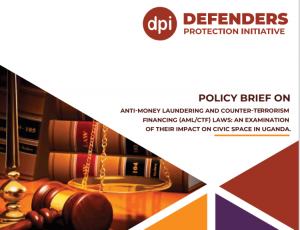
Policy Brief on AML/CTF Laws: An Examination of their Impact on Civic Space in Uganda

By virtue of it being a member state, Uganda is enjoined to follow the UN counter terrorism recommendations including the adoption of relevant AML and CTF legislations. Similarly, although Uganda is not a member of FATF, it is obliged to follow its recommendations as a matter of international comity. Besides, Uganda and East Africa as a region have had their own bitter experience with terrorism.

On July 11, 2010, the country experienced its worst terror attack in the form of twin bombings at two prominent places of entertainment. In both these attacks a substantial number of lives were lost (76 people) while many others were left with permanent injuries.

amlctf

AML/CFT Virtual National Dialogue & Report Launch

Since 2016, Defenders Protection Initiative has enhanced its focus towards mitigating the unintended consequences orchestrated by Financial Action Task Force (FATF) inspired laws/ regulations on the activities of legitimate charities in Uganda. During this period, DPI has been able to broaden her AML/CFT capacity building initiatives in 8 regions of Uganda, conducted research and strategic engagements by and for civil society actors as a pushback strategy against over-regulation.

As part of her novel initiatives, DPI conducted a Virtual National Dialogue and Report Launch of the study conducted between December 2020 and March 2021, titled: Anti-Money Laundering and Counter-Terrorism Financing (AML/CTF) Laws: “An Examination of Their Impact on Civic Space in Uganda”

The Virtual National Dialogue and the launch of the report provided an opportunity to share, reflect and disseminate the findings with a diverse group of stakeholders comprising of of advocates, civil society leaders, academia, media practitioners, students, researchers and the donor community.

Event Recording

We also want to interest you in

Uganda-martyrs

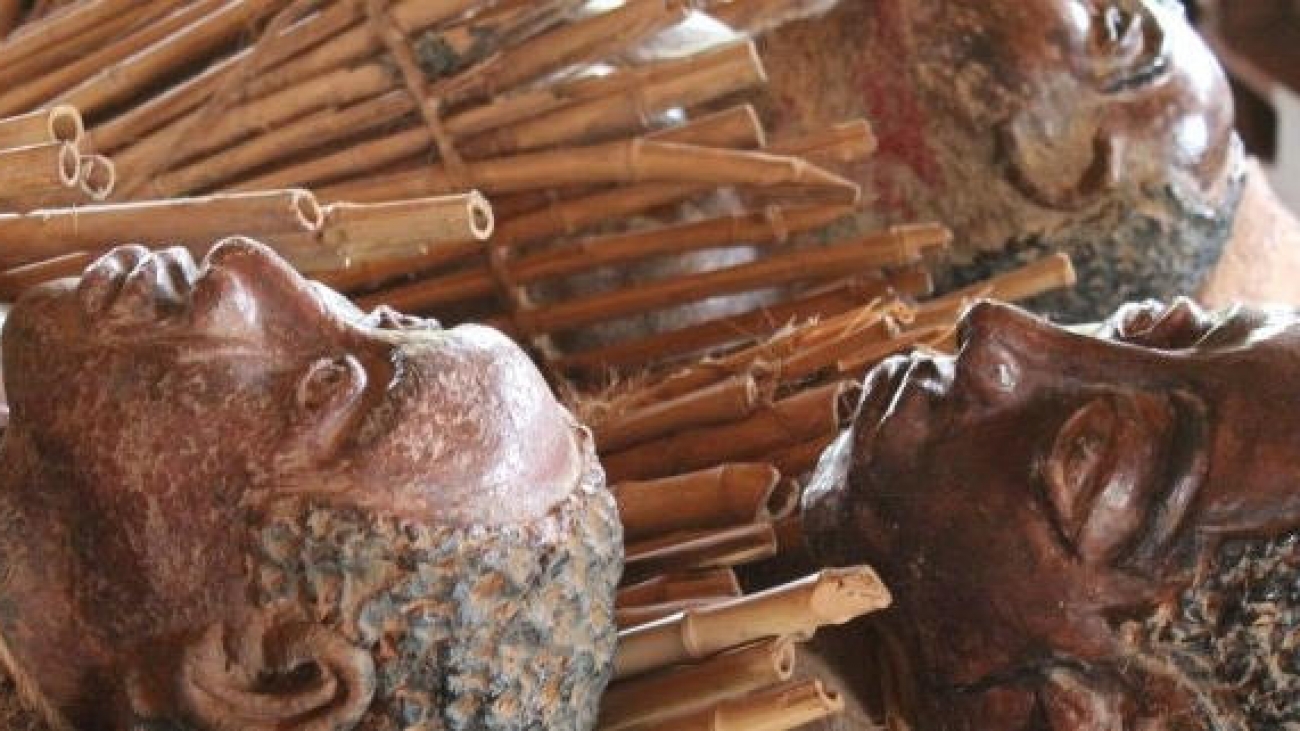
Uganda Martyrs’ death as a subject to the violation of Human rights.

 As we take the break to remember and mourn for the Uganda martyrs who died due to the violation of their religious rights, we wanted to take a moment today to think of those who are still struggling for their religious rights as workers, and to speak about some of the exploitation that is sadly still prevalent across the world. 

Improving rights around the world is central to our mission of preventing violation of human rights in the working environment. We work with major corporations and organizations to help them understand where there might be risk of religious rights violation in their work places and to identify the tell-tale signs of other various forms of human rights violation . We run campaigns around the globe which seek to raise awareness of different forms of human rights violation, and to help those who may be victims of this violation know their rights and seek support where necessary.  

Ultimately, we seek to encourage people to #SpotTheSigns of violation, speak openly about its realities and report suspicious activity when they see it.  

Human-rights

10 Reasons Why Human Rights Are Important

Defenders Protection Initiative (DPI) is global organization comprising of many corporations in unity with people who take injustice and violations of human rights as an offense. We are  well known for employing research, advocacy, action and campaigns to fight against abuses of human rights around the world. One of the ways our organization fights against injustice is through informing the public. DPI covers a broad spectrum of issues from women’s rights and political freedoms to regional and global conflicts. We also offer digital security.

Below are some of the top reason why Human Rights Are Important.

#1: Human rights ensure people have basic needs met

Everyone needs access to medicine, food and water, clothes, and shelter. By including these in a person’s basic human rights, everyone has a baseline level of dignity. Unfortunately, there are still millions of people out there who don’t have these necessities, but saying it’s a matter of human rights allows activists and others to work towards getting those for everyone.

#2: Human rights protect vulnerable groups from abuse

The Declaration of Human Rights was created largely because of the Holocaust and the horrors of work load limit. During that time in history, the most vulnerable in society were targeted along with the population, including those with disabilities.

#3: Human rights allow people to stand up to societal corruption

The concept of human rights allows people to speak up when they experience abuse and corruption. This is why specific rights like the right to assemble are so crucial because no society is perfect. The concept of human rights empowers people and tells them that they deserve dignity from society, whether it’s the government or their work environment. When they don’t receive it, they can stand up.

#4: Human rights encourage freedom of speech and expression

While similar to what you just read above, being able to speak freely without fear of brutal reprisal is more expansive. It encompasses ideas and forms of expression that not everybody will like or agree with, but no one should ever feel like they are going to be in danger from their government because of what they think. It goes both ways, too, and protects people who want to debate or argue with certain ideas expressed in their society.

#5: Human rights give people the freedom to practice their religion (or not practice any)

Religious violence and oppression occur over and over again all across history, from the Crusades to the Holocaust to modern terrorism in the name of religion. Human rights acknowledges the importance of a person’s religion and spiritual beliefs, and lets them practice in peace. The freedom to not hold to a religion is also a human right.

#6: Human rights allows people to love who they choose

The importance of freedom to love cannot be understated. Being able to choose what one’s romantic life looks like is an essential human right. The consequences of not protecting this right are clear when you look at countries and tribes where where women are forced into marriages they don’t want.

#7: Human rights encourage equal work opportunities

The right to work and make a living allows people to flourish in their society. Without acknowledging that the work environment can be biased or downright oppressive, people find themselves enduring abuse or insufficient opportunities. The concept of human rights provides a guide for how workers should be treated and encourages equality.

#8: Human rights give people access to education

Education is important for so many reasons and is crucial for societies where poverty is common. Organizations and governments concerned with human rights provide access to schooling, supplies, and more in order to halt the cycle of poverty. Seeing education as a right means everyone can get access, not just the elite.

#9: Human rights protect the environment

The marriage between human rights and environmentalism is becoming stronger due to climate change and the effects it has on people. We live in the world, we need the land, so it makes sense that what happens to the environment impacts humanity. The right to clean air, clean soil, and clean water are all as important as the other rights included in this list.

#10: Human rights provide a universal standard that holds governments accountable

When the Universal Declaration of Human rights was released, it had a two-fold purpose: provide a guideline for the future and force the world to acknowledge that. Human rights had been violated on a massive scale. With a standard for what is a human right, governments can be held accountable for their actions. There’s power in naming an injustice and pointing to a precedent, which makes the Universal Declaration of Human Rights and other human rights documents so important.

hacker-attack

Top Ways Businesses get Hacked

Bait and Switch Attack

Using trusted marketing methods such as paid-for advertising on websites, attackers can trick you into visiting malicious sites. When websites sell advertising space, it can be purchased by rogue attackers. The bona fide advertisement can be replaced with a ‘bad’ link that can be used to download malware, lock up your browser, or compromise your systems.

Alternatively, the advertisement may link to a legitimate website, but it will be programmed to redirect you to a harmful site

Key Logger

A key logger is a small piece of software that, when downloaded into your computer, will record every keystroke. The key logger will capture every keystroke on the keyboard, every username, password and credit card number, etc., exposing all of your data and personal information

Denial of Service (DoS\DDoS) Attacks

A Denial of Service attack is a hacking technique designed to flood your web server with a myriad of requests to the point that it overloads the web server resulting in a website crash.

To do this, hackers will deploy botnets or zombie computers that have a single task, flood your web site with data requests

ClickJacking Attacks

This method tricks you into clicking on something different from what you thought you were clicking. The clickjacking element could be a button on a web page that, when clicked, performs another function, allowing others to take control of the computer. The host website may not be aware of the existence of the clickjacking element.

Fake W.A.P.

A hacker can use software to impersonate a wireless access point (W.A.P.), which can connect to the ‘official’ public place W.A.P. that you are using. Once you get connected to the fake W.A.P., a hacker can access your data.

To fool you, the hacker will give the fake W.A.P. an apparent genuine name such as ’T.F. Green Aiport Free WiFi.’

Cookie Theft


The cookies in your web browsers (Chrome, Safari, etc.) store personal data such as browsing history, username, and passwords for different sites we access. Hackers will send I.P. (data) packets that pass through your computer, and they can do that if the website you are browsing doesn’t have an SSL (Secure Socket Layer) certificate. Websites that begin with HTTPS:// are secure, whereas sites that start with HTTP:// (no ‘S’) do not have SSL and are NOT considered secure.

Viruses and Trojans

Viruses or Trojans are malicious software programs that, when installed on your computer, will send your data to the hacker. They can also lock your files, spread to all the computers connected to your network, and perform many other nasty actions.

Seek for a Security Check

As you can see, it is all too easy to have your business systems inadvertently compromised, you can seek for a security check to secure to protect your business. It is tailored to the needs of each business.   click here